
Mayura Janwalkar travels to Kedambe, a tiny village in Maharashtra's Satara district, now better known as 26/11 hero Tukaram Omble's home. An excerpt from 26/11 Stories Of Strength by The Indian Express.

'Indian politics has had three-and-a-half master narratives -- secular nationalism, Hindu nationalism, justice for lower castes and regionalism. The AAP seeks to go beyond that. Therein lies its promise and its challenge,' says Ashutosh Varshney, Brown University professor and author of book Battles Half Won, India's Improbable Democracy.


The terror strike on Mumbai, carried out by ten suicidal terrorists and planned by the Lashkar-e-Tayiba, had cost less than Rs 25 lakh.

The blockchain, the public ledger that tracks every bitcoin transaction, is changing commerce as we know it, says Devangshu Datta.

'Unlike Dr Manmohan Singh, who quailed and turned away because the darkness was too frightening, Modi has taken a leap to the other side. He deserves applause for this fearlessness,' says Aditi Phadnis.

'A robust electoral democracy provides the institutional basis for the generation and regeneration of political hope.'

'My speculation is that the BCCI believes that it is dangerous for credible insiders to stay outside its area of influence. It wants people like these three cricketers inside the tent rather than outside it,' says Aakar Patel.
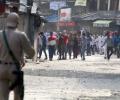
Kashmiri Pandits complain that the Jammu and Kashmir government has simply cowered to hardline sentiments and that the real reason for canceling the pilgrimage was not due to ecological concerns but because of religion. Upasna Pandey reports

'Nehru had multiple chances to make compromises, that would have preserved a united India, and he chose not to,' Nisid Hajari tells Vaihayasi Pande Daniel/Rediff.com

The paramilitary force, set up in December 1, 1965, is India's first line of defence and has the distinction of being world's largest border guarding force.
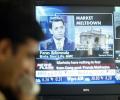
Soon after the BJP lost the 2004 election, the stockmarkets went into unprecedented free fall. Then SEBI Chairman G N Bajpai reveals how his firm handling of the situation restored confidence and soon the markets were back to doing what they do best -- make money. A revealing excerpt from his book, A Game Changer's Memoir.

'ISRO provides a very positive atmosphere. What matters here is your talent, not your gender,' says Ritu Karidhal, Deputy Operations Director, India's Mars orbital mission, Mangalyaan. A fascinating excerpt from Minnie Vaid's Those Magnificent Women And Their Flying Machines, Isro's Mission To Mars.

By annoying potential allies ahead of the polls, the Bharatiya Janata Party's prime ministerial candidate is playing a dangerous game but if he wins, he gets it all, says Aditi Phadnis

'Let me talk about young Indian startups with their hearts in the right place and how they are proving that innovations that represent 'affordable excellence' -- breaking the myth that 'affordability' and 'excellence' cannot go together -- is indeed possible!' says Dr R A Mashelkar, the eminent scientist, in this fascinating feature.
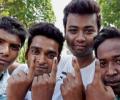
Just in case the NDA is unable to reach 272 seats and is in the low range of 220 seats, then some novel ideas may spring up. Like a 'national government'. Sheela Bhatt/Rediff.com reports on the various scenarios that are being considered by the political parties, and by the President of India.

'I would count my rotis and eat.' 'I broke my sister and brother's insurance policies.' 'Whatever savings I had got over.' 'I was struggling for work.' 'I used to struggle for Rs 500, Rs 1,000.'
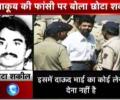
That most newsrooms, high on the 'exclusive' interview with a fugitive living overseas, are not able to perceive this distrust is a reflection of the disconnect today's media has with reality

Privatisation in Russia was endorsed by technocrats. It led to the rise of Vladimir Putin.
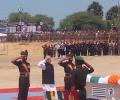
Does India's first majoritarian government that is hard-focused on economic development have it in it to provide the Muslim community the healing touch? On evidence available so far, I am not hopeful at all. Yet, like the besieged community, I too find it impossible to abandon hope in the land's millennia-old syncretic traditions, says Saisuresh Sivaswamy.
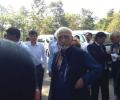
Just like with millions of Indian Muslims, even the vice president of India has been forced to undergo the covert loyalty test: 'you are presumed to be pro-Pakistan until you demonstrably prove you are a nationalist', says Shehzad Poonawalla.

The Tata empire turns 150 this year. R Gopalakrishnan, former director, Tata Sons Ltd, imagines a conversation among the group's founder Jamsetji, his son Dorabji, his successor, Nowroji Saklatwala, and his successor, J R D Tata.

The processor is just 5 per cent of the overall cost of a computing device.

Subrata Roy turned up at a New Delhi stadium, best known for hosting the Commonwealth Games, last week as part of his country wide Abhaar Yatra.

'The defence minister should concentrate on acquiring a bigger stick, rather than brag of using terrorists as State policy.'
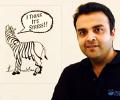
His anonymous online platform helps people seek help without disclosing their identity.

An upcoming film on Mohammad Azharuddin promises to be a potboiler, though not a true biopic.
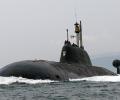
'We have been found seriously wanting in addressing our undersea warfare capability and China's emergence is a cause for concern.'
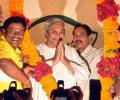
'In being dismissive of Naveen, his colleagues showed incredible naivety.' 'On the few occasions that he put his foot down, the overconfident party leaders, who believed they were using him and not the other way around, failed to read the signs of what was to come.'

While China is bigger and feels mightier at the moment, Beijing's rulers would be well advised not to be tempted to provoke India, for that would only trigger a chain reaction around the world that would not serve anyone's interests, says Sanjaya Baru.

'Narendra Modi could be too old to change his personality. On the other hand, his attachment to the RSS could be mostly sentimental. So one must hope that if he becomes prime minister, he is able to detach himself from the RSS view of the world as completely as Narasimha Rao detached himself from the Congress's First Family.' 'India cannot be governed by the autocratic methods by which he has governed Gujarat. If he becomes prime minister he will have to learn to speak in a more civil language about his political opponents,' historian Ramachandra Guha tells Arthur J Pais/Rediff.com

The Bharatiya Janata Party's hot saffronite swami is yoga teacher Ramdev.

'How does one get to weaken all those pillars on which the Deep State of Pakistan and the Separatists rely to prevent the situation reaching that point; how must this stage of the proxy war be countered? In many ways the strategy being followed by the adversaries is a smart one, acting within threshold and avoiding overpitch,' says Lieutenant General Syed Ata Hasnain (retd).

Historian Romila Thapar, while delivering the 3rd Nikhil Chakravartty Memorial Lecture organised by The Book Review Literary Trust in New Delhi, delved on the growing hesitation among free-thinking Indians.

'Tibet remains a prickly issue between the giant Asian nations. China still claims more than 80,000 sq kilometres of Indian territory in the Northeast. Why? Just because Beijing refuses to acknowledge the McMahon line which separates India and Tibet, and this, simply because the 1914 Agreement delineating the border was signed by the then government of independent Tibet with India's then foreign secretary (Sir Henry McMahon),' says Claude Arpi.

'Modi's campaign has been strikingly devoid of anti-Muslim rhetoric. After the kutta pilla incident, it has been several months since he said something horrible about the Muslims of India. It is the result of democratic constraints. He has to make compromises... He's trying to reinvent himself. He will politically hurt himself if 2002 becomes the definition of Mr Modi again', says political scientist Ashutosh Varshney.
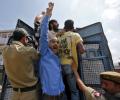
'The nation State can thrive if all communities believe they have a stake in it; that their interests will be safeguarded; that there will be no discrimination; that there will be justice.' 'The political leadership of this country needs to decide whether it wants to mitigate these challenges to the nation by making necessary correction or whether it wants to ignore these questions that Yakub's noose has left behind,' says Ankur Bhardwaj.

'There is nothing traitorous about highlighting the poor record of your own government. If the Indian government does something wrong, we all have the right to point this out at any forum, international or national.'

'...Unless we muck up our policies.' 'We have to become a modernised economy.' 'Our institutions should be stronger. And that is most important.' 'The rule of law should prevail and contracts should be enforced.' 'Above all, we have to recognise the importance of globalisation.' 'It is in our favour at this stage. We should grow and become globally competitive.'

'I was a bit startled when our host spoke with such force and at such great length about Terrorism.' 'Where did that come from?' 'He kept insisting that it comes from across the border.' 'I could not remember who all are across India's borders and was looking puzzled, but Zuma who understood my predicament, whispered "Pakistan".'
 © 2026 Rediff.com - Advertise with us - Disclaimer - Privacy Policy - Sitemap - Feedback - About us - Terms of use - Grievances